
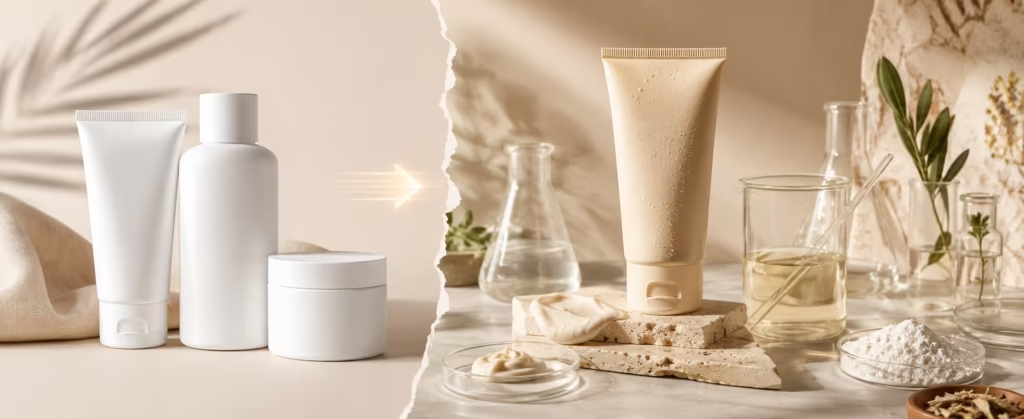
There’s a moment a lot of beauty founders hit with sunscreen specifically. The white-label SPF they launched with is fine (it works and it is compliant) but it is the exact same base three competitors are selling under different labels, and customers have noticed.
That is the point where brands start calling cosmetic manufacturers in Canada about custom SPF formulation. The honest version of that conversation is clear: custom sunscreen is one of the hardest, most regulated things you can make, and it is worth understanding why before you commit.
SPF isn’t a normal cosmetic. In Canada, it is a regulated drug product, which changes everything about your timeline, your testing, and your upfront costs.
White-label exists precisely because it lets brands skip that operational difficulty. Going custom means taking it on deliberately and for a strategic reason.
Why brands leave white-label behind
White-label SPF has a ceiling, and brands typically hit it in three ways:
- Sameness: You’re selling a shared base, so you can’t differentiate on texture, finish, or feel, which are the primary things sunscreen customers actually complain about.
- Claims You Can’t Make: Desirable positioning like “invisible on deep skin tones,” “no white cast,” “reef-conscious,” or “weightless under makeup” requires specific formulation control that you simply don’t have.
- Margin and Supply: You are completely at the mercy of someone else’s catalogue, MOQs, and unexpected reformulations.
Custom solves all three, but it replaces a simple catalogue order with a major development project. That’s the trade.
What custom SPF formulation actually involves
This is where founders are often surprised, so here’s the real scope:
- Filter selection. Mineral (zinc oxide, titanium dioxide), chemical, or hybrid — each drives the texture, cast, and feel. This single choice shapes the whole product.
- The cosmetic-elegance problem. Getting genuine SPF protection without a white cast or a heavy, greasy finish is the hard part. It’s why custom takes iterations, not one sample.
- SPF testing. The number on the label has to be earned through standardized testing (in-vivo and/or in-vitro). This is non-negotiable, takes time, and costs real money.
- Stability and photostability. The formula has to hold its protection and texture across heat, light, and shelf life — sunscreen that degrades in a hot car is a genuine failure mode.
- Regulatory approval. In Canada, sunscreens require the proper product licensing before sale. That approval timeline belongs in your launch plan from day one, not bolted on at the end.
Why “summer launch” timelines usually slip
Founders often want SPF on shelves for summer and start looking for partners in the spring. The math rarely works. A custom SPF program, which includes formulation iterations, SPF testing, stability data, and regulatory approval, is realistically a multi-quarter process.
The brands that get summer-ready SPF started the previous year. A manufacturer worth working with will tell you that plainly rather than promising an unrealistic timeline that forces shortcuts on the one product category where shortcuts are dangerous.
The detail that’s now also a marketing asset
Here’s something modern beauty data has made clear: explaining your formulation is no longer just an R&D necessity, it’s how you get discovered.
A growing share of sunscreen research happens through AI search tools, where consumers ask highly specific questions like “best mineral sunscreen with no white cast” or “is chemical sunscreen safe.” AI engines surface brands that explain their filter choices, testing, and rationale clearly and with specifics.
Brands that can articulate why they chose their SPF system, backed by real numbers, show up in those answers far more than brands with polished marketing claims and nothing underneath. Your manufacturing story is your best content.
How to decide if custom is right for you
- Go custom when your brand positioning genuinely depends on a sunscreen experience you cannot get off a shelf, when you have the timeline to do testing properly, and when your projected volumes justify the upfront investment.
- Stay white-label when you are simply testing a concept or absolutely need speed to market.
The wrong move is choosing custom for the idea of it, then compressing the testing phase to hit a strict launch date. On an SPF product, that’s the one place it can hurt both your customers and your brand reputation.
Done right, custom SPF is one of the strongest moats a beauty brand can build because it is genuinely hard to copy. That difficulty is the point.
Ready to build an ownable, high-performance sun care line that sets your brand apart?
Swift Innovations is here to help you navigate every step of the process, from custom active extraction and cosmetic elegance to stability testing and strict regulatory compliance.
Frequently Asked Questions
Why is custom SPF harder to make than other cosmetics?
In Canada, sunscreen is a regulated drug product requiring standardized SPF testing, photostability data, and product licensing before sale — a multi-quarter process far more involved than a standard cosmetic.
How long does custom sunscreen formulation take?
Realistically several quarters, covering formulation iterations, in-vivo/in-vitro SPF testing, stability testing, and regulatory approval. Brands aiming for a summer launch typically need to start the previous year.
Is mineral or chemical sunscreen better for a custom formula?
Neither is universally better — mineral (zinc/titanium), chemical, and hybrid systems each affect texture, cast, and feel differently. The right choice depends on your target finish, claims, and audience.
Why are brands switching from white-label to custom SPF?
White-label uses shared bases, limiting differentiation on texture and finish and restricting the claims you can make. Custom cosmetic formulation gives an ownable, hard-to-copy product worth the added time and cost.