
Botanical extracts have long been used in skincare and haircare, but their appeal goes beyond the growing interest in plant-based beauty. Depending on the plant, extraction method, and composition, these ingredients offer skin-conditioning, antioxidant, soothing, and scalp-care benefits.
At Swift Innovations, we’re expanding our botanical extract collection to give formulators and beauty brands more choices when developing skincare, haircare, and personal care products.
Here’s a closer look at the extracts in our collection, their potential benefits, and where they fit into cosmetic formulations.
Botanical Extracts for Skincare and Haircare
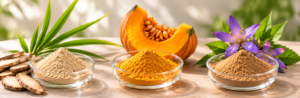
Calamus Extract Powder
Calamus (Acorus calamus) has a long history of traditional botanical use. Its aromatic properties make it interesting for formulators exploring herbal-inspired personal care products.
Potential applications include scalp treatments, botanical hair preparations, and specialty cleansing products. The extract’s composition depends on the plant material and extraction process.
Calamus requires particular attention to safety because certain varieties contain beta-asarone, a compound subject to regulatory restrictions. Formulators should verify the extract’s composition and suitability for cosmetic use before selecting it.
Pumpkin Extract Powder
Pumpkin is a familiar ingredient in skincare, particularly in products developed around nourishment and skin conditioning.
Pumpkin-derived extracts contain varying amounts of naturally occurring compounds, including phenolics and carotenoids, depending on how they’re processed. These compounds contribute to interest in pumpkin as an antioxidant-focused cosmetic ingredient.
Pumpkin Extract Powder is worth exploring for facial masks, moisturizers, conditioning creams, and botanical skincare treatments.
It’s important to distinguish pumpkin extract from pumpkin enzyme products. A standard pumpkin extract does not automatically provide exfoliating enzyme activity.
Swertia Japonica Extract
Swertia japonica is a botanical used in traditional Japanese herbal preparations. In cosmetics, it is particularly associated with scalp-care and hair-tonic formulations.
The plant contains bitter compounds, including swertiamarin, which have attracted interest in botanical research.
For haircare brands, Swertia Japonica Extract offers an option for developing scalp serums, leave-in tonics, and botanical hair treatments.
Its suitability for claims relating to hair growth or reduced hair loss depends on evidence for the specific extract and finished formulation.
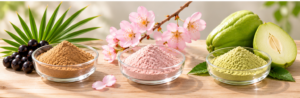
Saw Palmetto Extract
The fruit of Serenoa repens provides Saw Palmetto Extract, an ingredient widely discussed in hair and scalp care.
Lipid-rich saw palmetto extracts contain fatty acids and phytosterols. Researchers have investigated their potential influence on pathways associated with androgen activity. However, findings from oral supplements do not establish the effectiveness of topical cosmetic products.
Formulators often consider saw palmetto for scalp serums, hair tonics, and products targeting thinning-hair concerns.
The extraction method also matters, particularly when selecting between oil-soluble and other extract formats.
Sakura Leaf Extract
Japanese cherry tree leaves provide Sakura Leaf Extract, a botanical ingredient for skincare formulations.
Cherry leaf extracts contain plant-derived phenolic compounds, which make them relevant to antioxidant and skin-conditioning formulations.
Formulators often incorporate botanical extracts into facial serums, moisturizers, soothing lotions, and other skincare products.
Sakura also offers an appealing ingredient story for Japanese-inspired skincare brands. However, brands should support specific soothing or antioxidant claims with appropriate ingredient documentation and testing.
Chayote Extract
Chayote (Sechium edule) belongs to the gourd family. Its naturally occurring phenolic compounds and other plant constituents have attracted interest in antioxidant research.
Formulators may consider Chayote Extract for moisturizers, facial serums, masks, and botanical skin-conditioning products.
The extract’s composition and concentration influence its potential benefits. Therefore, brands should review supplier documentation before making specific efficacy claims.
More Botanical Options to Explore
Beyond these six botanical extracts, our collection also features CucumiPure™, CucurbaVita™, and Cucumber Extract.
Skincare formulators frequently explore cucumber-derived ingredients for refreshing, hydrating, and skin-conditioning products. Common applications include facial gels, lightweight moisturizers, masks, and after-sun formulations.
Choosing the Right Botanical Extract
Selecting the right botanical extract starts with understanding its role in your formulation. Factors such as extraction method, concentration, solubility, stability, and processing requirements influence how well an ingredient performs in a finished product.
Before adding a botanical extract, review its INCI name, recommended usage level, pH compatibility, and safety documentation.
Whether you’re developing a scalp treatment, facial serum, moisturizer, or botanical skincare collection, selecting ingredients based on their documented properties helps you develop a more reliable formulation.
Explore the growing range of botanical ingredients available through Swift Innovations.
Shop Botanical Extracts at Swift Innovations
Visit our entire collection here Shop@SwiftInnovations